
Quantum Information Science

How do we harness the power of quantum mechanics to improve information processing?
The Quantum Information Science program focuses on the fundamental science behind quantum information and quantum technologies in order to understand how best to harness it, solve important computational problems, and develop new insights into physics and information. The program takes a broad interdisciplinary approach, bringing together physicists, computer scientists, and others working in connected disciplines in order to address the field’s most fundamental challenges.
IMPACT CLUSTERS
The Quantum Information Science program is part of the following CIFAR Impact Cluster: Exploring Emerging Technologies. CIFAR’s research programs are organized into 5 distinct Impact Clusters that address significant global issues and are committed to fostering an environment in which breakthroughs emerge.
RESEARCH AND SOCIETAL IMPACT HIGHLIGHTS
Mitigating errors in the most common quantum computing architecture
Circuit quantum electrodynamics (QED) architecture is the most widely studied approach to building quantum computers in both academic and industry settings, but it could often produce inaccurate results when its qubits (the units of information that quantum computers operate on) are measured. A team led by CIFAR Fellow Alexandre Blais (Université de Sherbrooke) and Associate Fellow Guifre Vidal (Google) employed Google’s powerful tensor processing units (TPUs) to discover the potential cause of measurement-induced errors in circuit QED, and develop a mitigation strategy to prevent some of the issues. These results potentially resolve the architecture’s almost 20 year old measurement problems, taking a major step towards building more successful, fault-tolerant quantum computers.
Harnessing the power of silicon
Silicon, the basis of today’s global semiconductor industry through which silicon-based devices could be inexpensively produced at scale, has a number of properties that make it a promising candidate platform for quantum computers and a future quantum internet. CIFAR Fellow Stephanie Simmons’ (Simon Fraser University) team created silicon chips with more than 100,000 individual “T centres”— defects in the silicon that can act as long-lived qubits and can also emit light to enable communication with each other. The research team also optically measured, for the first time, the properties of a single spin qubit in silicon. These results pave the way to creating silicon-based quantum communication networks.
SELECTED PAPERS
Knill, E., R. Laflamme et G.J. Milburn. "A scheme for efficient quantum computation with linear optics." Nature 409 (2001) : 46-52. ABSTRACT
Negrevergne, C. et al. "Benchmarking quantum control methods on a 12-qubit system." Physical Review Letters, 96 (2006) : 170501 ABSTRACT
L. A. Rozema et al., “Quantum Data Compression of a Qubit Ensemble,” Physical Review Letters 113, 16 (2014). ABSTRACT
J. Zhang et al., “Digital quantum simulation of the statistical mechanics of a frustrated magnet,” Nature Communications 3, 880 (2012). ABSTRACT
Founded In
2002
Renewal Dates
2007, 2012, 2019
Interdisciplinary Collaboration
Computer science, including quantum computing and theory of computation
Quantum, condensed matter, mathematical and atomic physics
Optics
Electronic and information engineering
Applied mathematics
Contact
Fellows & Advisors
Program Directors
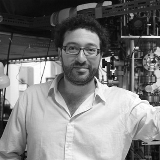
Aephraim M. Steinberg
Program Director
Fellows
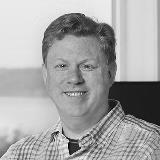
David Bacon
Associate Fellow
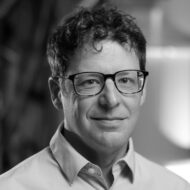
Alexandre Blais
Fellow

Mercedes Gimeno-Segovia
Associate Fellow
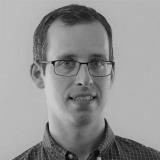
David Gosset
Fellow
University of Waterloo
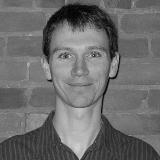
Patrick Hayden
Fellow
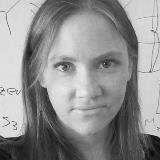
Stacey Jeffery
Fellow
QuSoft

Ben Lanyon
Fellow
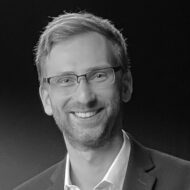
Zlatko K Minev
Associate Fellow
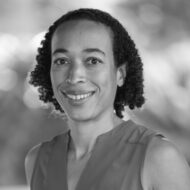
Monika Schleier-Smith
Fellow
Irfan Siddiqi
Fellow

Stephanie Simmons
Fellow
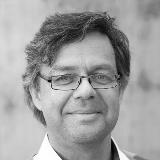
Matthias Troyer
Associate Fellow
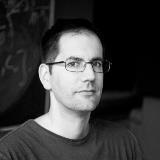
Guifré Vidal
Associate Fellow
Nathan Wiebe
Fellow
University of Toronto
Advisors
Dorit Aharonov
Advisor
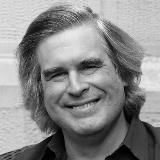
Gilles Brassard
Advisor
John Preskill
Advisor
CIFAR Azrieli Global Scholars

Ashok Ajoy
CIFAR Azrieli Global Scholars 2022-2024
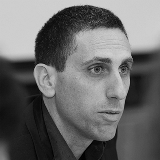
Nir Bar-Gill
CIFAR Azrieli Global Scholar 2016-2018
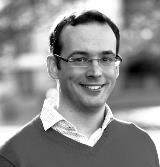
Giulio Chiribella
CIFAR Azrieli Global Scholar 2016-2018
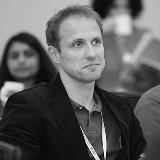
Gerhard Kirchmair
CIFAR Azrieli Global Scholar 2016-2018
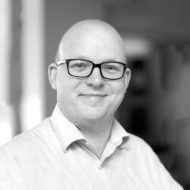
Peter McMahon
CIFAR Azrieli Global Scholar 2020-2022

Christine Muschik
CIFAR Azrieli Global Scholar 2020-2022
University of Waterloo
Alexei Ourjoumtsev
CIFAR Azrieli Global Scholar 2020-2022
Paul Skrzypczyk
CIFAR Azrieli Global Scholars 2022-2024
Pablo Solano
CIFAR Azrieli Global Scholars 2022-2024
Thomas Vidick
CIFAR Azrieli Global Scholar 2017-2019
Related News
Advances
CIFAR researchers measure the duration of quantum tunnelling
July 22, 2020
News
A Quantum Festschrift for David Poulin
June 17, 2020
Advances
Quantum supremacy: Giant leap, or one small step?
October 29, 2019
Award