
Successful Societies

Why are some societies more successful than others?
Successful societies are those that create conditions that lead to better health, well-being and resilience for individuals and communities. The program aims to identify the cultural and social frameworks that put societies on a path toward greater and more equitable prosperity. It looks beyond simple economic analysis, and examines how an individual’s sense of identity and belonging within a culture can affect overall economic, physical and psychological well-being.
The Successful Societies program brings together academics from sociology, political science, political philosophy, history, economics, and organizational, cultural and social psychology to share insights and create new understandings about how societal structures facilitate or inhibit the flourishing of a society. The program bridges the gap between researchers interested in studying institutions and those who study culture. It shows how understanding the interaction of institutional and cultural frameworks gives meaningful insights into how societies create opportunities for individual fulfilment and happiness.
The program provides a broad framework for research and analysis, while also providing insights that directly inform debate about hard questions with public policy implications around the globe. Work by fellows in the program has informed policy around early childhood education, immigration, health policy and more.
In contrast to research groups that focus largely on income inequality as an economic or political phenomenon, the Successful Societies program considers how a wide range of social inequalities—including inequalities of gender, race, religion, class and income—are related to one another. Drawing on its interdisciplinary strengths, the program analyses the cultural and social processes that generate, reinforce or mitigate such inequalities. Since its launch in 2002, the program has produced two influential volumes: Social Resilience in the Neoliberal Era (2013) and Successful Societies: How Institutions and Culture Affect Health (2009).
Li, L., C. Power, S. Kelly, C. Hertzman and C. Kirschbaum, “Life-time socio-economic position and cortisol secretion patterns in mid-life,” Psychoneuroendocrinology 32, 7 (2007) : 824 -833.
Bouchard, G. L’Interculturalisme. Un point de vue québécois. Montréal, Boréal, 2012.
A. Swidler and S. Cotts Watkins, “‘Teach a Man to Fish’: The Sustainability Doctrine and Its Social Consequences,” World Development 37, 7 (July 2009) 1182-1196. ABSTRACT
W. Sewell, “Economic Crises and the Shape of Modern History,” Public Culture 24, 2 (2012) : 302-27. ABSTRACT
Hall, P. and Lamont, M.. Social Resilience In The Neoliberal Era. Cambridge: Cambridge University Press, 2013. ABSTRACT
Founded In
2002
Interdisciplinary Collaboration
Sociology, including demography, social stratification, social theory and cultural sociology; political science, including comparative politics, political economy and comparative public policy; organizational, cultural and social psychology; political philosophy; history; economics
Fellows & Advisors
Program Directors
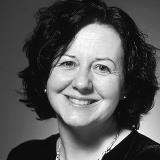
Michèle Lamont
Program Co-Director
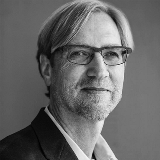
Paul Pierson
Program Co-Director
Fellows
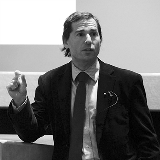
David B. Grusky
Fellow
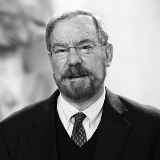
Peter A. Hall
Fellow

Leanne S. Son Hing
Fellow
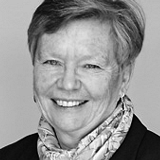
Jane Jenson
Fellow
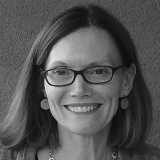
Francesca Polletta
Fellow
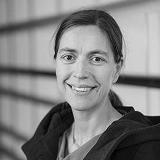
Paige Raibmon
Fellow
William H. Sewell
Fellow
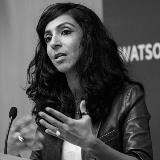
Prerna Singh
Fellow
Successful Societies
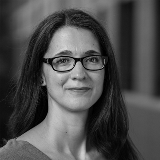
Anne E. Wilson
Fellow
Advisors
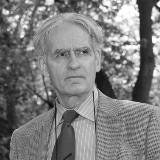
Gérard Bouchard
Advisor

Wendy Espeland
Advisor
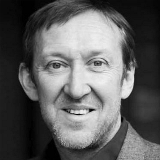
Patrick Le Galès
Advisor
Peter Gourevitch
Advisory Committee Chair
Hazel Markus
Advisor
Successful Societies
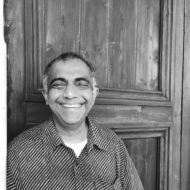
Vijayendra Rao
Advisory Committee Chair
Advisor
Successful Societies
CIFAR Azrieli Global Scholars
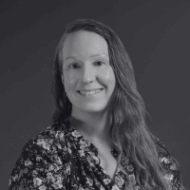
Kristi Kenyon
CIFAR Azrieli Global Scholar 2017-2019
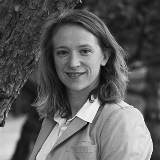
Kristin Laurin
CIFAR Azrieli Global Scholar 2017-2019
Related News

News
Culture shift: Q&A with sociologist Michèle Lamont
June 17, 2020
Event Brief
Rethinking Inequality: The Role of Identity, Narratives, Recognition, and Judgements
December 12, 2019
Event Brief
Inequality as a Multidimensional Process
December 12, 2019
Event Brief